2026-11-16
Styes Are So Annoying Every Time They Appear! What Should You Do?!
Explains how styes (hordeolum) differ from chalazion, why they form, standard treatment, when to see a doctor, and how eyelid cellulitis differs from a stye.
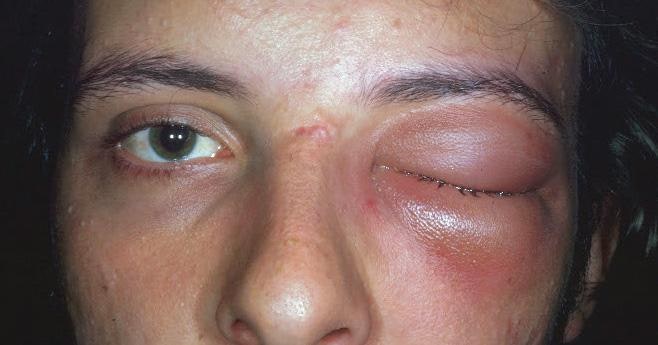
Styes! So annoying, right?
When your eyes turn red and puffy, your whole face looks different,
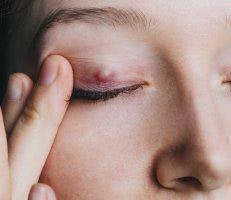
A closed eye with a red, swollen bump on the upper eyelid, with a finger resting gently beside the eye.
It hurts every time you blink, and in severe cases, yellow pus can even come out!
So why on earth do styes keep forming?
First, from an academic standpoint, styes can be divided into two types: chalazion (kong-daraekki) and hordeolum (daraekki).
The medical term for the first is chalazion, and for the second, hordeolum (stye).
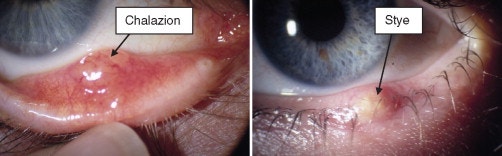
Side-by-side photos: a chalazion on the inner lower eyelid (left) and a stye on the lower lid margin (right).
Chalazion (kong-daraekki) is a chronic, granulomatous, non-infectious inflammation of the meibomian glands that causes no pain.
Hordeolum (stye), by contrast, is caused by a bacterial infection of the eyelash follicles and is accompanied by pain.
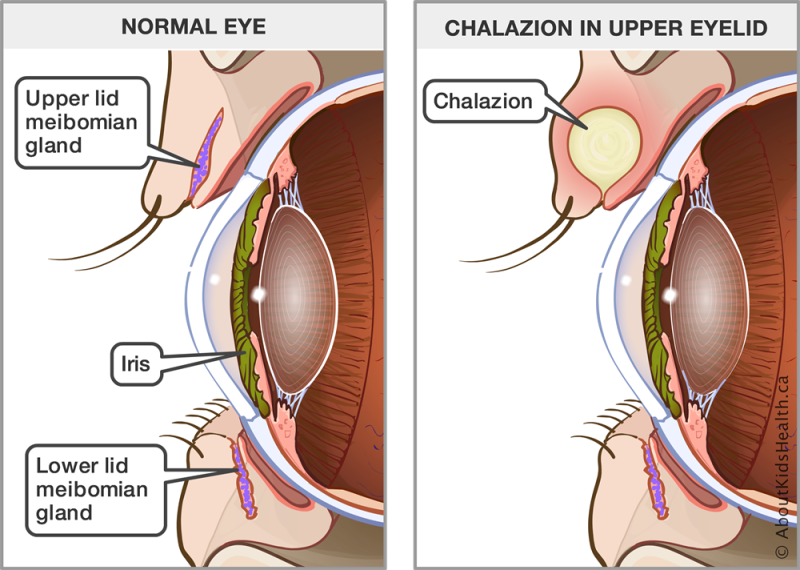
Illustration comparing a normal eye, with the meibomian glands and iris labeled, and an eye with a chalazion in the upper eyelid.
As the illustration shows, our eyelids contain oil glands called meibomian glands.
When non-infectious inflammation develops here and pus builds up in these oil glands, that is the mechanism behind chalazion.
The textbook treatment principle for styes is to prescribe eye drops and ointment while the patient takes oral antibiotics and anti-inflammatory medication.
Of course, incision and drainage can also be considered.
However, when pus has formed on the outer side of the skin, cosmetic skin closure must be carefully considered after the incision, so
if the inflammation can be controlled with medication, that is the preferred approach.
Styes that have lasted too long and left scarring from granulation tissue may not resolve easily, even with a local steroid injection.
That is why we recommend seeing a doctor for treatment as soon as a stye appears.
A major condition to distinguish from a stye is eyelid cellulitis.
A face with one eye severely swollen; the eyelids are red and puffy and the eye is nearly shut.
Cellulitis is a deep-seated inflammation that can significantly raise intraocular pressure. If the inflammation penetrates deeply past the orbital septum inside the eyelid, it can lead to serious consequences, so
patients should receive intravenous antibiotic treatment and undergo a detailed eye examination.
We often see stye patients who assume it's nothing serious, buy medication at the pharmacy on their own, and then come to the hospital late after their condition has worsened.
It is best to see an eye doctor from the very beginning and receive appropriate treatment.
This has been Dr. Park Jin-hyung, Director of Seongmo Jin Eye Clinic. ^^
#Floaters #SeongmoJinEyeClinic #JinEyeClinic #MacularDegeneration #RetinalDisease #RealEyeClinic #Retina #Ophthalmology #Presbyopia #IPL #SkinCare #TotalCare #Laser #Rejuvenation #AntiAging #Whitening #Cataract #MultifocalLens #CataractSurgery #GangnamEyeClinic #SeongmoEyeClinic #PresbyopiaSurgery #OphthalmologyProfessor #Glaucoma #DryEyes #DryEyeSyndrome #DryEye #LASIK #LASEK #GangnamLASIK #SmileLASIK #ArtificialTears #Lenses #PainlessLASEK #TodayLASEK
Frequently Asked Questions
How are styes and chalazion (kong-daraekki) different?
Chalazion (kong-daraekki) is a painless, non-infectious inflammation, while hordeolum (daraekki) is a bacterial infection of the eyelash follicle that causes pain. Chalazion is explained as developing when non-infectious inflammation occurs in the eyelid's oil glands (meibomian glands) and pus accumulates.
How are styes usually treated?
The textbook approach to treating styes is to prescribe eye drops and ointment while the patient takes oral antibiotics and anti-inflammatory medication. Incision and drainage can also be considered. However, when pus has formed on the outer surface of the skin, careful cosmetic skin closure is needed after the incision, so if the inflammation can be controlled with medication, that approach is preferred.
When should I see a doctor for a stye?
If a stye develops, it's best to see an eye doctor as early as possible. Styes that have lasted too long and left scarring from granulation tissue may not resolve easily, even with a local steroid injection.
How is eyelid cellulitis different from a stye?
Eyelid cellulitis is a deep inflammation that must be distinguished from a stye. It can significantly raise intraocular pressure, and if the inflammation penetrates deeply, it can lead to serious complications. In such cases, intravenous antibiotic treatment and a detailed eye examination are needed.
Is it okay to use pharmacy medication for a stye on my own?
It's better to see an eye doctor from the start rather than buying and using medication from a pharmacy on your own. Some people think a stye is nothing serious, use medication on their own, and only visit the hospital after their symptoms have worsened.