2026-09-11
Can You Get SMILE LASIK After Wearing Contact Lenses for Years? Key Points to Know Before Your Exam
Can you get SMILE LASIK after years of wearing contacts? Discover the required lens discontinuation periods, dry eye considerations, and SILK SMILE options for a safe procedure in this guide by St. Mary's Jin Eye Center.

Many people wonder if it is still possible to undergo SMILE LASIK after wearing contact lenses for a long time. To give you the short answer: wearing lenses for years does not rule you out for SMILE LASIK. Candidacy is determined not by how many years you wore contacts, but by how stably your cornea recovers after discontinuing them. However, it is true that your pre-operative preparation needs to be slightly more meticulous.
Today, we have compiled the most frequently asked questions from long-term contact lens wearers considering SMILE LASIK.
1. Does the discontinuation period before surgery vary depending on the type of contact lens?
You must take out your contact lenses well before your SMILE LASIK evaluation, and the reason is simple: to obtain accurate test measurements.
Because contact lenses rest directly on your cornea, they affect corneal shape and the condition of the tear film. If you wear contacts right up until your exam, the measurements may not reflect your true eye condition, which can derail the entire surgical plan.
The required discontinuation period varies based on the type of lens you wear.
Lens Type | Recommended Discontinuation Period |
Soft lenses (including daily and colored lenses) | At least 2 weeks |
Toric soft lenses (for astigmatism) | At least 3 weeks |
Hard lenses (RGP) | At least 3 weeks or more |
Orthokeratology lenses (Dream lenses) | At least 4 weeks or more |
Completing the discontinuation period does not automatically finalize your surgery schedule. The surgical plan is finalized only after verifying that two separate sets of test measurements match within an acceptable range (refractive stability). This stabilization confirmation process is especially crucial for long-term wearers.
This step is essential for an accurate pre-SMILE assessment and serves as a vital benchmark to verify whether your cornea has returned to a stable, natural state.
2. If I have worn lenses for a long time, is a comprehensive pre-op exam mandatory?
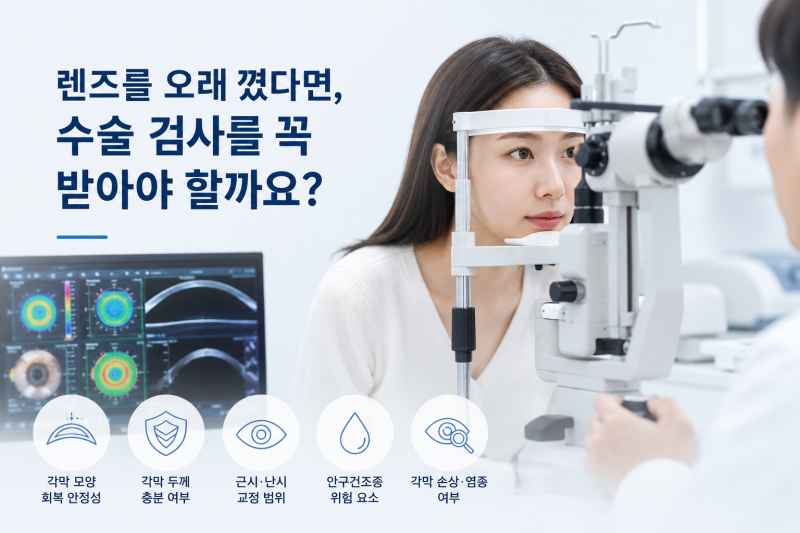
Many believe that wearing contacts for a prolonged period permanently disqualifies them from laser vision correction, but that is a myth. In fact, many put off consultations due to this misunderstanding, even though true candidacy can only be determined through detailed diagnostic exams.
It is not uncommon for individuals who have worn contact lenses for over 10 years to receive approval for SMILE LASIK. Conversely, even someone who has worn them for a short time might be ineligible due to poor corneal conditions. What truly matters is not 'how long you wore them,' but whether your corneas currently meet the criteria for surgery.
In particular, the following factors must be thoroughly examined:
Whether corneal shape has stably recovered after lens discontinuation
Whether corneal thickness is sufficient
Whether your degree of myopia and astigmatism falls within the treatable range
Whether there are risk factors for dry eye syndrome
Whether there is any superficial damage or inflammation on the corneal surface
3. Can I still have surgery if I have dry eye syndrome?
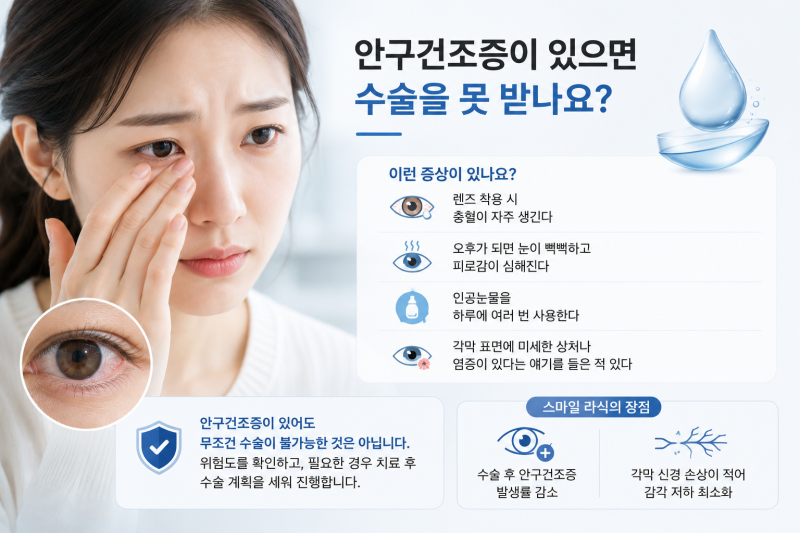
Having dry eye syndrome does not mean surgery is completely impossible. Instead, your risk level is evaluated first, and if necessary, appropriate treatment is administered before planning the procedure. In fact, because SMILE LASIK causes minimal disruption to corneal nerves, it is reported to cause less post-operative dry eye and less reduction in corneal sensitivity compared to conventional LASIK.
Dry eye syndrome is one of the most common issues experienced by long-term contact lens wearers. While it may start out as a mild feeling of dryness, prolonged irritation can lead to redness, foreign body sensations, eye strain, and blurred vision.
If any of the following apply to you, be sure to share them with your medical team during your consultation:
Your eyes often become red when wearing lenses
Your eyes feel gritty and heavily fatigued by the afternoon
You use artificial tears multiple times a day
You have been told you have minor scratches or inflammation on your cornea
4. What procedure is best suited for sensitive corneas?
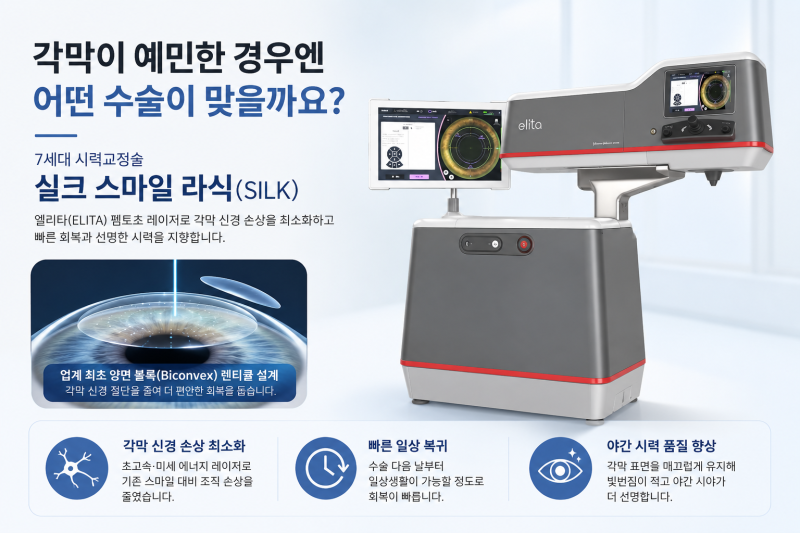
For those whose corneas have become sensitive or who suffer from pronounced dry eye due to long-term lens use, 7th-generation vision correction known as 'SILK SMILE LASIK' (Smooth Incision Lenticule Keratomileusis) can be an excellent alternative. SILK utilizes the ELITA femtosecond laser by Johnson & Johnson Vision. The company highlights that this technique is the industry's first to utilize a biconvex lenticule design, reducing corneal nerve severing and promoting rapid recovery.
Key highlights include:
Minimized corneal nerve damage: Engineered with an ultra-fast, low-energy laser designed to minimize tissue damage compared to conventional lenticule extraction.
Rapid return to daily life: Due to the swift recovery, many patients are able to resume normal daily activities as early as the next day (results may vary by individual).
Enhanced night vision quality: By creating an exceptionally smooth corneal surface, it aims to reduce halos and glare while enhancing night-time visual clarity.
5. How should I prepare on the day before and the day of my exam?
The most common mistake when preparing for a SMILE evaluation is assuming, "I took my lenses out for a couple of days, so I should be fine." Strictly adhering to the recommended discontinuation timeframe and allowing your eyes to stabilize is directly linked to optimal surgical outcomes.
📌 The Day Before the Exam
Avoid heavy alcohol consumption (alcohol dehydrates the eyes severely, lowering test accuracy)
Get plenty of sleep to prevent ocular fatigue
Refrain from excessive screen time or eye-straining activities
📌 The Day of the Exam
Come to the clinic wearing your eyeglasses, not contact lenses
Note down the type and frequency of any artificial tears or eye drops you use
Inform the front desk immediately if you have redness or a foreign body sensation
✅ Self-Checklist for Lens Wearers
I know the exact type of contact lenses I currently wear
I have confirmed that my schedule allows me to observe the recommended discontinuation period
My eyes often feel dry or bloodshot → Comprehensive dry eye testing required
I have worn Ortho-K or RGP hard lenses for over 2 years → Discontinuation period may need to be longer
I have previously been diagnosed with corneal abrasions or inflammation from lens wear → Must inform the medical team beforehand
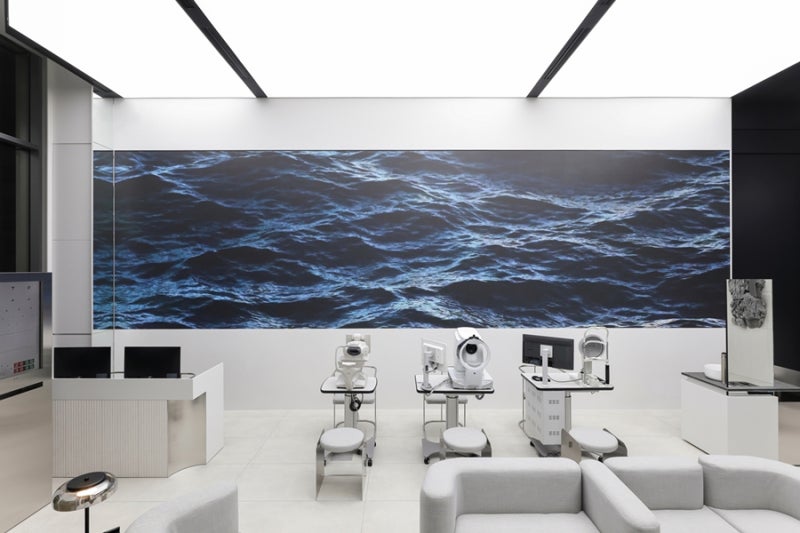
The longer your history with contact lenses, the more critical a thorough pre-operative examination becomes.
Only by comprehensively evaluating corneal topography, tear film quality, astigmatism axis, and corneal thickness can a safe, customized surgical plan be created.
At St. Mary's Jin Eye Center, retina clinical professors from Seoul St. Mary's Hospital personally provide consultations, designing personalized vision correction plans that consider both your corneal health and everyday lifestyle. Even if you have a long history of lens wear, worry about dry eyes, or have used Ortho-K or hard lenses for years, our detailed diagnostic testing will accurately evaluate your surgical candidacy.
If you wish to break free from the persistent discomfort of contact lenses, start by assessing your current ocular health through an in-depth examination.
Summary: You can still undergo SMILE LASIK even after years of contact lens wear. Your cornea's recovery status and comprehensive exam results matter far more than how long you wore lenses, and discontinuation periods vary depending on your lens type!
SILK LASIK vs. Conventional SMILE: Key Highlights of 7th-Generation Technology
Frequently Asked Questions
Can I get SMILE LASIK if I have worn contact lenses for over 10 years?
Yes, it is possible. Candidacy is determined not by how long you wore contacts, but by how stably your corneas recover after stopping lens wear, verified through thorough diagnostic testing.
How many days must I stop wearing contacts before my SMILE LASIK exam?
It depends on the lens type. Soft lenses require at least 2 weeks, toric soft lenses and RGP hard lenses require at least 3 weeks, and Ortho-K (Dream) lenses require at least 4 weeks or more to ensure accurate measurements.
Can I get SMILE LASIK if I suffer from severe dry eye syndrome?
Dry eye does not automatically make surgery impossible. Your risk profile will be assessed first, and treatment can be administered prior to surgery. Furthermore, SMILE LASIK presents a lower risk of post-op dry eye and corneal desensitization compared to conventional LASIK.
Which procedure is recommended for thin or sensitive corneas?
7th-generation SILK SMILE LASIK can be a great option. By utilizing the ELITA femtosecond laser and a biconvex lenticule design, it minimizes corneal nerve trauma, supporting faster recovery and reducing the burden of dry eyes.
What are the key precautions for the day before and the day of the exam?
On the day before, avoid heavy drinking and get sufficient sleep. On the day of the exam, wear glasses instead of lenses, and be sure to inform your medical team about your artificial tear use and any current ocular discomfort.