2026-10-31
Poor Lens Care Could Let Amoebas Invade Your Eyes—Even Blindness?!❔❗
Rinsing lenses with tap water or handling them with unwashed hands can let Acanthamoeba invade the cornea, causing serious ulcers that may leave permanent damage.

As colored contact lenses have become widely used,
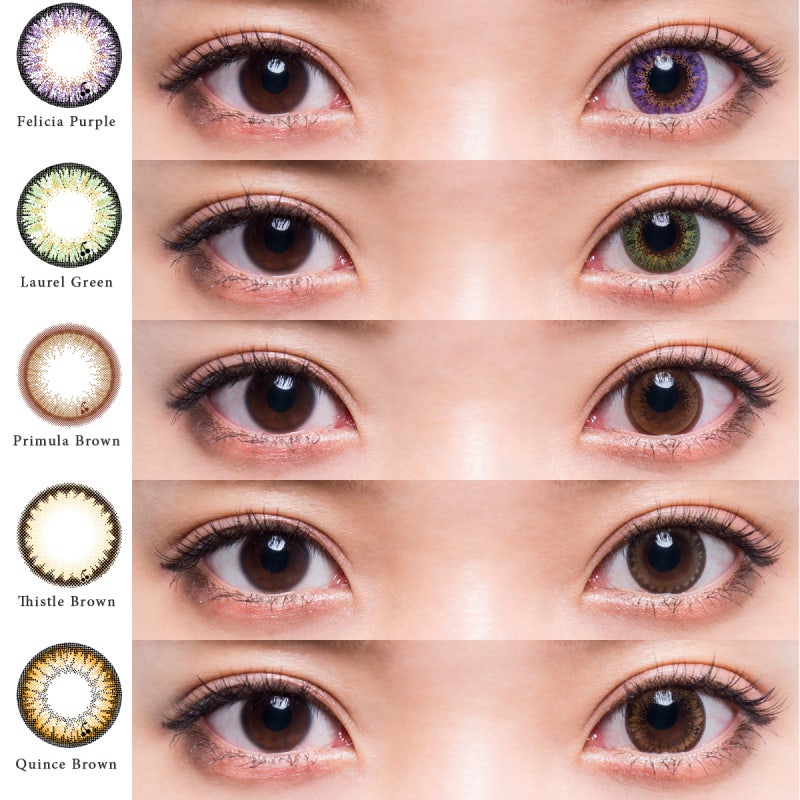
Five colored contact lens shades (purple, green and three browns), each worn on one eye beside the other, bare eye.
the number of people wearing lenses is steadily increasing.
Like the proverbial finishing touch that brings a painting to life, colored lenses have become part of everyday makeup, and they are especially popular among women.
As the number of users grows, lens-related complications have also become more frequent.
Today, I would like to discuss the ophthalmic complications associated with lens use and the precautions you should take.
First, contact lenses can be broadly divided into soft and hard lenses based on their material.
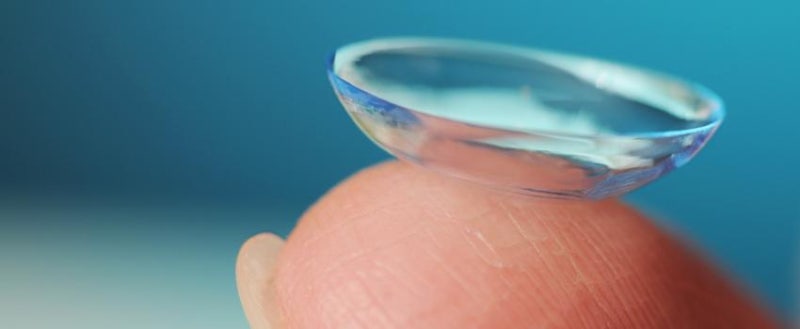
A clear contact lens resting on a fingertip.
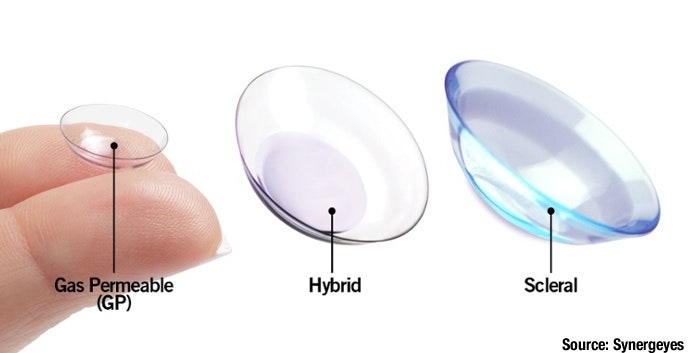
Three types of contact lenses: gas permeable (GP), hybrid and scleral. Source: Synergeyes.
Soft lenses are further divided into clear lenses and colored lenses.
Because soft lenses made of silicone hydrogel cover the entire surface of the cornea, the concept of oxygen permeability is important.
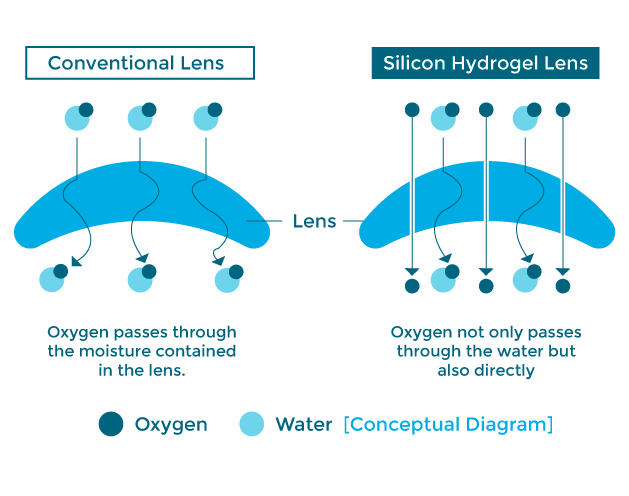
Diagram: in conventional lenses oxygen passes through the water in the lens; in silicone hydrogel lenses it also passes directly.
In contrast, hard lenses, which are smaller than the cornea, are made of a material called RGP (Rigid Gas Permeable) that allows oxygen to pass through, so oxygen permeation is not a concern.
Illustration of oxygen passing through a contact lens.
That is why hard lenses are generally considered better for corneal health than soft lenses.
However, as the name suggests, hard lenses are rigid, so
they can cause a stronger foreign-body sensation in the eye than soft lenses, and some wearers may fail to adapt to them.
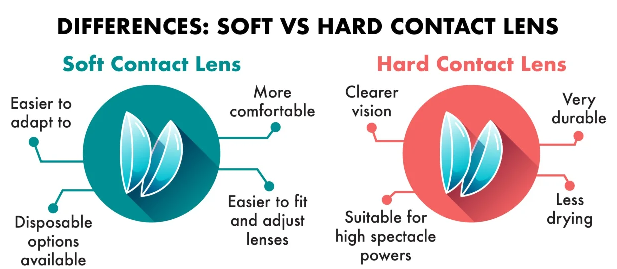
Soft lenses: comfortable, easy to adapt to and fit, disposable. Hard lenses: clearer vision, durable, less drying, suit high prescriptions.
Corneal cells need an adequate supply of oxygen,
but lenses can reduce the oxygen supply or physically damage the cornea.
The most common condition is epithelial keratitis.
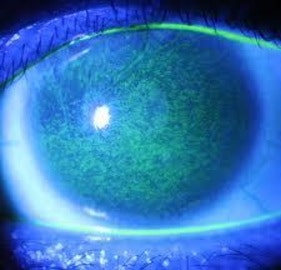
Cornea stained with fluorescein dye under blue light, showing many fine green spots on its surface.
Corneal epithelial cells sit on the outermost layer of the cornea and are easily damaged depending on the condition of the cornea.
That said, they also regenerate quickly with proper treatment.
In addition, a corneal abrasion can occur while removing lenses.
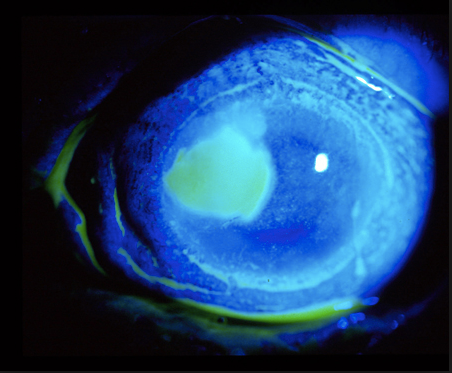
Eye under blue light after fluorescein staining, with a large bright green stained patch on the cornea.
In such cases, the epithelium sloughs off over a wide area, causing pain and conjunctival redness.
If bacteria or fungi invade the damaged epithelium, it can progress to a serious condition called corneal ulcer.
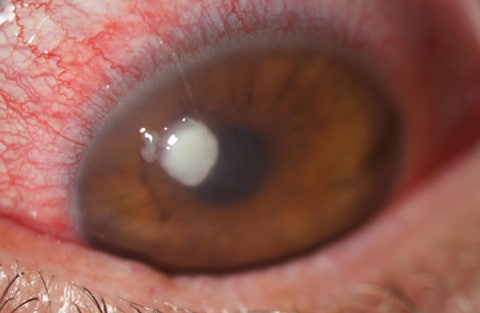
Bloodshot eye with a round white spot on the cornea, near the pupil.
Corneal ulcers require long-term medication tailored to the invading organism, and even after full recovery, they can leave permanent clouding in the affected area of the cornea.
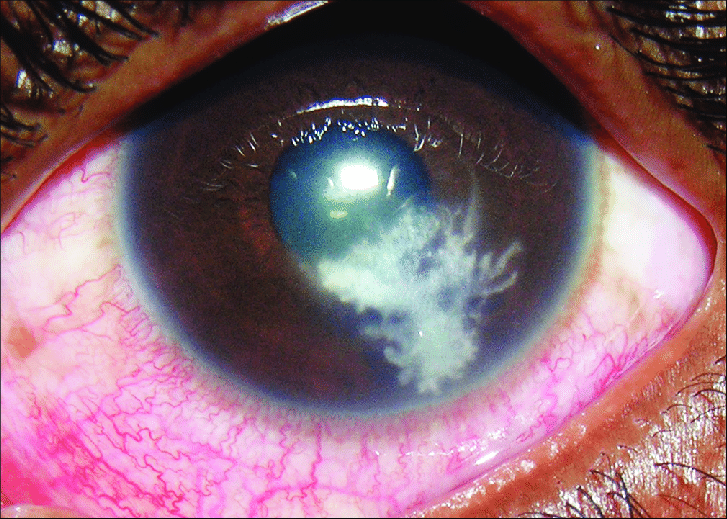
Red eye with a white, branching opacity spreading across the cornea.
Also, if inflammation is not properly controlled, the cornea at the ulcer site can perforate, or the inflammation can spread to the inside of the eye.
When an amoeba such as Acanthamoeba, rather than a bacterium or fungus, causes the ulcer, treatment becomes even more difficult,
and in severe cases, uncontrolled endophthalmitis may even make it necessary to remove the eye.
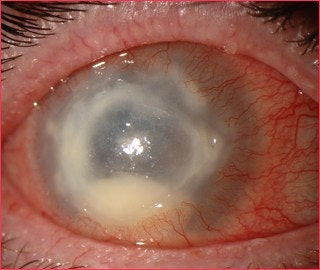
Severely red eye with a cloudy cornea and a whitish ring-shaped opacity around the center.
Acanthamoeba can invade the cornea when lenses are rinsed with tap water instead of lens solution, or when lenses are handled and worn with unwashed, contaminated hands.
Treatment of corneal ulcers begins with empirical medication based on the shape and pattern of the lesion, distinguishing between bacterial and fungal causes, while culture tests are performed.
Antibiotics are used for bacterial infections, and antifungal agents are used for fungal infections,
while for Acanthamoeba, a specially compounded medication called PHMB (polyhexamethylene biguanide) is used.
Fungal corneal ulcers and Acanthamoeba corneal ulcers may require several months of hospitalization for treatment.
To prevent these serious corneal ulcers, make sure to rinse your lenses with the proper lens solution
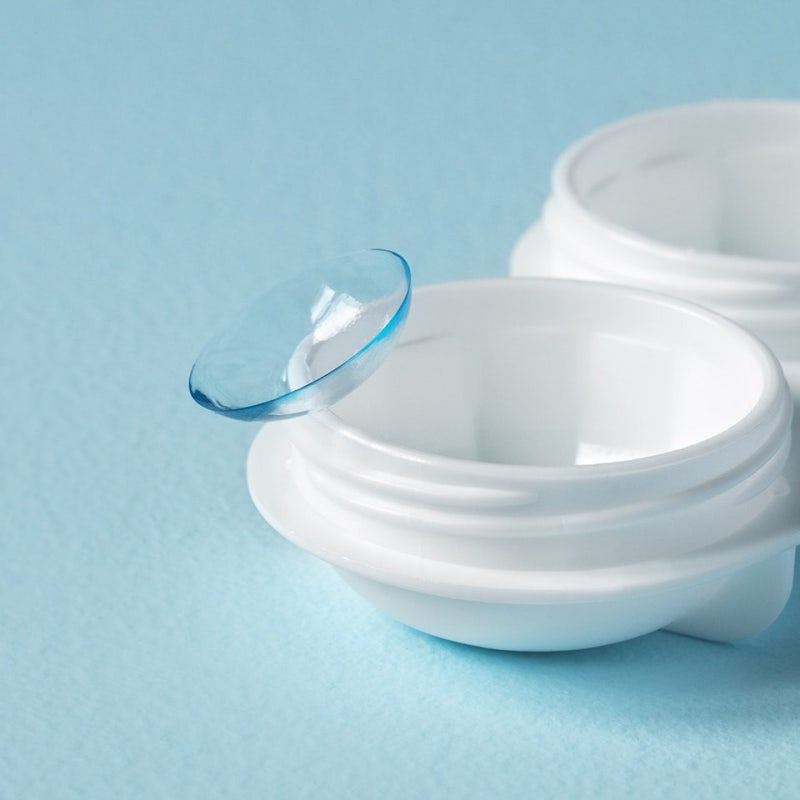
and wash your hands thoroughly before handling your lenses.
Today, we have looked at the types of contact lenses and the eye conditions associated with each.
This has been Park Jin-hyung, Chief Director of Seongmo Jin Eye Clinic.
If you have any questions about lens use, feel free to contact Seongmo Jin Eye Clinic near Gangnam Station anytime ^^
#SeongmoJinEyeClinic #JinEyeClinic #EyeClinic #Presbyopia #Cataract #Multifocal #Retina #Glaucoma #DryEye #DryEyeSyndrome #DryEyes #MacularDegeneration #RetinalDisease #CataractSurgery #GangnamEyeClinic #SeongmoEyeClinic #PresbyopiaSurgery #OphthalmologyProfessor #RealEyeClinic #LASIK #LASEK #GangnamLASIK #SMILE #ArtificialTears #ContactLens #PainlessLASEK #TodayLASEK #EyeDisease #IPL #SkinCare #TotalCare #Laser #Amoeba #CornealUlcer #ColoredLenses #CircleLenses #HardLenses #DreamLens #OneDayLenses #SoftLenses #Lutein
Frequently Asked Questions
Is it okay to rinse lenses with tap water and wear them?
No, it is best to avoid rinsing lenses with tap water before wearing them. Acanthamoeba can invade the cornea when lenses are rinsed with tap water or handled with unwashed hands. Lenses should be rinsed with the proper lens solution.
Which is better for the cornea, soft lenses or hard lenses?
Hard lenses are generally considered better for corneal health. They are made of RGP, an oxygen-permeable material, so there is no concern about oxygen transmission. However, because they are rigid, they can cause more of a foreign-body sensation than soft lenses, and some people may not be able to adapt to them.
What is the most common condition caused by wearing lenses?
The most common condition is epithelial keratitis, with punctate epithelial keratitis caused by lens wear being a typical example. Corneal abrasions can also occur when removing lenses, and if bacteria or fungi invade the damaged epithelium, it can develop into a serious condition called corneal ulcer.
Can corneal ulcers leave scars even after they heal?
Yes, even after complete healing, permanent clouding may remain in the affected area of the cornea. Corneal ulcers require long-term medication tailored to the invading organism. Fungal and Acanthamoeba corneal ulcers may even require several months of hospitalization for treatment.
Is Acanthamoeba keratitis harder to treat?
Yes, it is said to be more difficult to treat than ulcers caused by bacteria or fungi. When Acanthamoeba causes an ulcer, treatment becomes even harder, and in severe cases, uncontrolled endophthalmitis may require removal of the eye. Acanthamoeba corneal ulcers are treated with a specially compounded PHMB medication.
How can I prevent lens-related complications?
Rinse your lenses with the proper lens solution and wash your hands thoroughly before handling them. Such care is stressed as essential for preventing serious corneal ulcers. Avoid rinsing lenses with tap water or touching them with unwashed hands.