2026-09-17
Everything About Implantable Collamer Lens (ICL) Surgery ❗
An in-depth guide to intraocular lens (ICL) implantation, covering the differences between anterior and posterior chamber lenses and the advanced benefits of the EVO+ Visian ICL.
Hello, I am Dr. Jin-hyeong Park, Chief Director of St. Mary's Jin Eye Clinic at Gangnam Station.
Many people are curious about intraocular lens implantation surgery,
so today, I would like to tell you everything you need to know about ICL surgery.
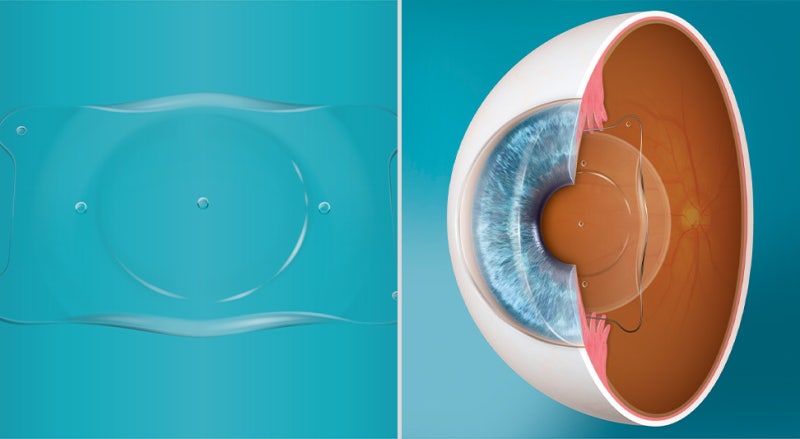
Intraocular lens implantation is a vision correction surgery that corrects refractive errors by literally inserting a lens inside the eye.
The method of implanting a lens into the eye is divided into anterior chamber implantation (in front of the iris) and posterior chamber implantation (behind the iris).
First, let's look at anterior chamber lens implantation:
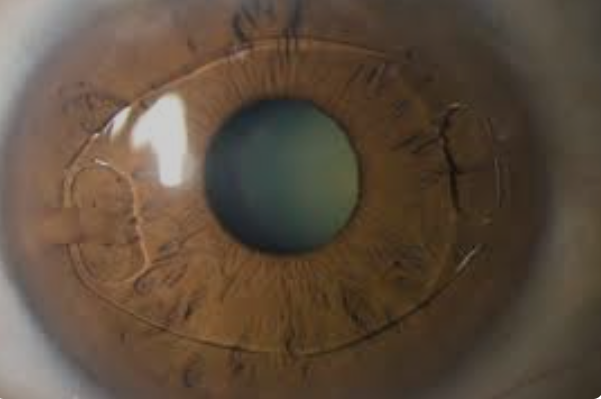
This is a surgical method where the lens is fixed to the front part of the iris.
The disadvantages of this procedure are:
Because the lens is located adjacent to the corneal endothelium and obstructs the flow of aqueous humor through the pupil,
it may, in the long term, cause damage to the corneal endothelial cells.
In contrast, there is posterior chamber intraocular lens implantation, where the lens is inserted behind the iris.
The EVO+ Visian ICL used at St. Mary's Jin Eye Clinic is the only state-of-the-art posterior chamber lens approved by the FDA.
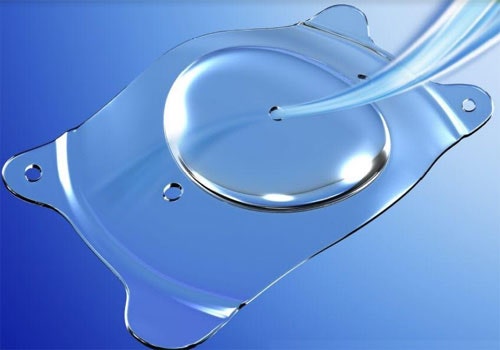
The material of this lens is "Collamer".
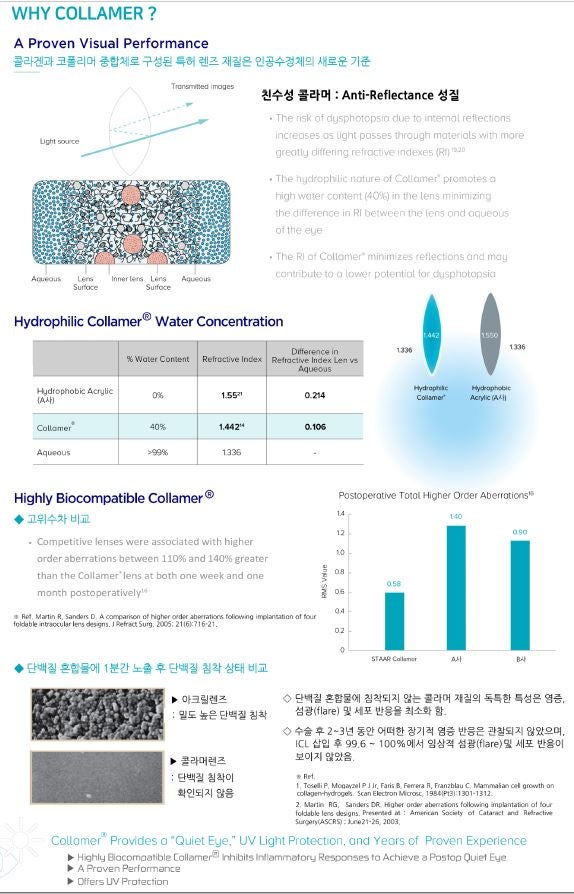
Collamer is composed of collagen and a co-polymer, with 40% of the lens consisting of water.
When inserting a lens inside the eye, the most crucial factor to consider is light halos and glare caused by internal reflections.
Because light refraction tends to increase when passing through different substances, the difference in refractive index is greatest at the interfaces where materials meet or intersect.
The hydrophilic/biocompatible properties of Collamer create a high-water-content layer on the lens surface, minimizing the refractive index difference between the ICL and the aqueous humor, allowing the lens surface to act as an anti-reflective layer.
Because Collamer's light transmission and reflection patterns are almost identical to those of the natural human crystalline lens, it minimizes glare and optical aberrations, enhancing postoperative visual quality.

Furthermore, compared to the acrylic material used in anterior chamber lenses, Collamer material is free from protein deposition.
While posterior chamber lenses do not affect the corneal endothelium, previous concerns included impeding the flow of aqueous humor and potentially causing cataracts.
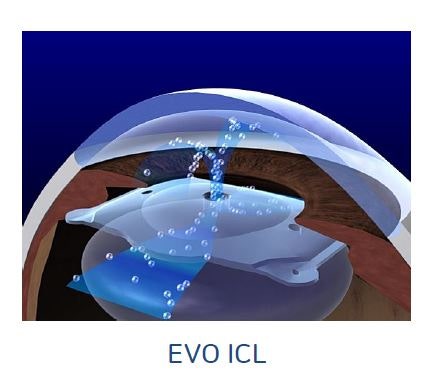
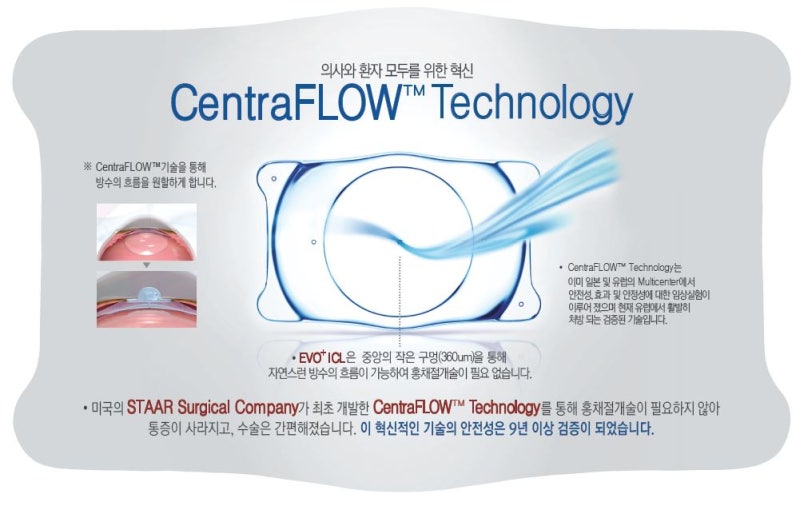
The EVO+ Visian ICL has minimized this issue by creating a central port for aqueous humor circulation and improving the optical zone design of the lens.
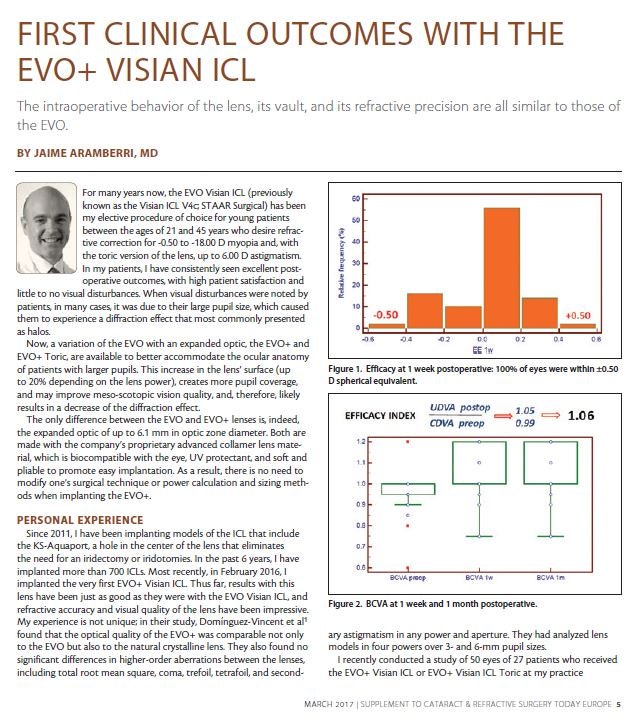

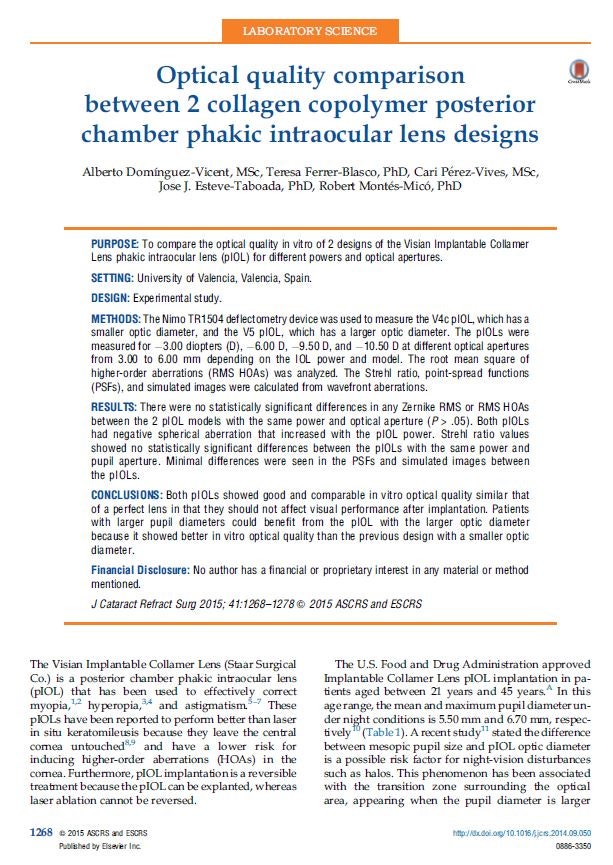
Its efficacy and safety have been well proven through numerous clinical research papers.
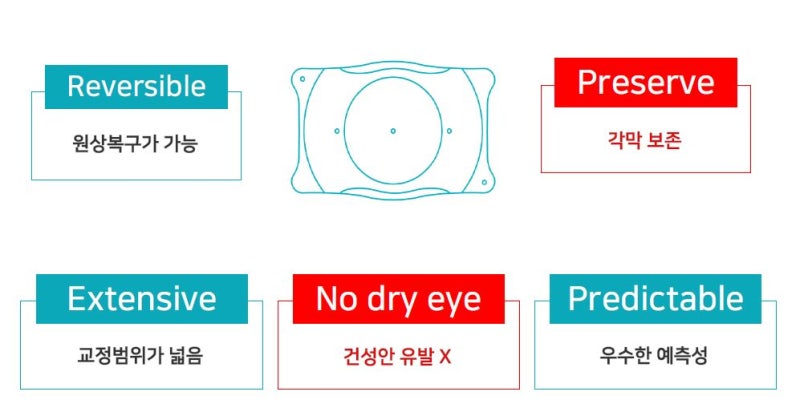



Posterior chamber phakic IOL surgery is being performed in countless cases worldwide.
We hope this overview provided clarity on intraocular lens implantation surgery.
If you have further questions regarding vision correction surgery,
please contact St. Mary's Jin Eye Clinic, where three former St. Mary's Hospital clinical professors provide expert medical diagnosis and surgical care!
#JinEyeClinic #Ophthalmology #Presbyopia #IPL #ICL #LensImplantation #EVO #visian #PhakicIOL #Laser #Cataract #MultifocalLens #CataractSurgery #GangnamOphthalmology #StMarysEyeClinic #PresbyopiaSurgery #EyeProfessor #Retina #Glaucoma #DryEye #DryEyeSyndrome #MacularDegeneration #RetinalDisease #LASIK #LASEK #GangnamLASIK #SMILELASIK #ArtificialTears #Lens #StMarysJinEyeClinic #PainlessLASEK #TwoDayLASEK #AmarisLASEK #AllLaserLASEK
Frequently Asked Questions
What kind of vision correction procedure is intraocular lens (ICL) implantation?
It is a vision correction surgery that corrects refractive errors by inserting a specialized lens inside the eye. Depending on where the lens is positioned, it is divided into anterior chamber implantation (fixed in front of the iris) and posterior chamber implantation (placed behind the iris).
What are the disadvantages of anterior chamber lens implantation?
A major disadvantage is the potential risk of long-term damage to the corneal endothelial cells. Because the lens is located in front of the iris close to the corneal endothelium and can impede the flow of aqueous humor through the pupil, cell loss may occur over time.
What material is the posterior chamber lens EVO+ Visian ICL made of?
It is made of Collamer, a biocompatible material composed of collagen and a co-polymer. Collamer consists of 40% water, offering light transmission similar to that of the human crystalline lens, minimizing glare and internal reflections, and preventing protein build-up.
How was the issue of obstructed aqueous humor flow resolved in posterior chamber lens implantation?
It was resolved by engineering a central port directly in the lens for fluid circulation. The EVO+ Visian ICL features an improved optical zone design and a central opening (CentraFlow) that maintains natural aqueous humor flow, effectively minimizing the risk of cataract development.